
The Art of Connection: Capturing the Soul Behind the Lens
Many photographers master the technicalities, yet struggle with the invisible ‘wall of glass’ that separates them from their subjects. This guide helps you bridge that gap, cultivating genuine rapport to capture authentic emotions and unforgettable moments.
Key Takeaways for Authentic Photography
- Master the art of genuine connection to unlock your subjects’ true emotions.
- Learn to capture spontaneous, candid moments that tell a deeper story.
- Develop communication strategies that build trust and comfort, going beyond technical skill.
Editor’s Top Picks: Quotes on Connection
It is more important to click with people than to click the shutter. – Alfred Eisenstaedt
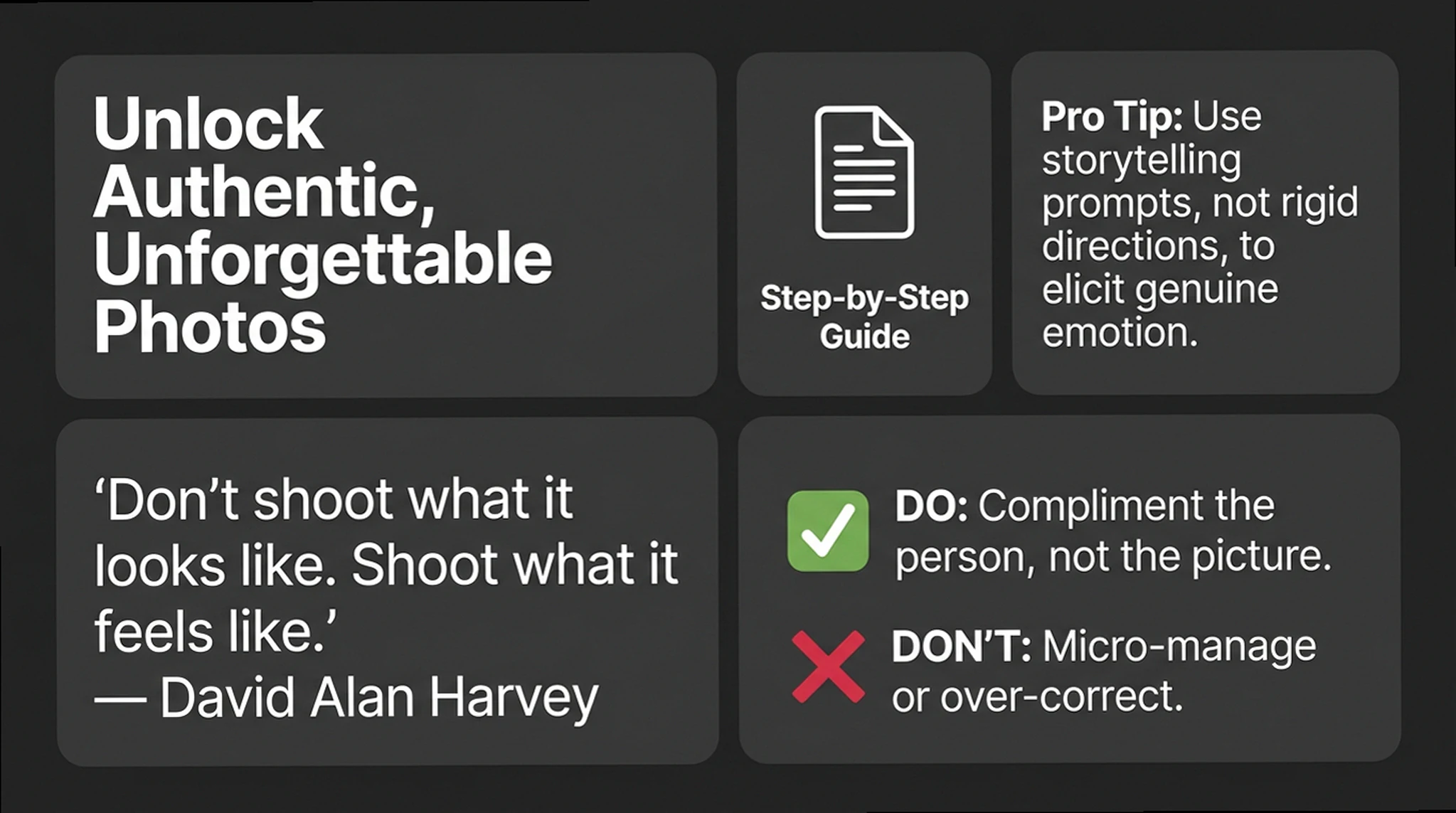
Don’t shoot what it looks like. Shoot what it feels like. – David Alan Harvey
Photography is about capturing souls not smiles. – Dragan Tapshanov
Profound Perspectives: Quotes on Photography’s Human Heart
Beyond the lens and aperture, photography truly comes alive through the stories it tells and the emotions it evokes. These curated quotes serve as a compass, guiding you to understand the deeper human essence within each frame, moving past mere technical precision to profound emotional resonance.
Quotes That Capture the Soul of Photography
- You don’t make a photograph just with a camera. You bring to the act of photography all the pictures you have seen, the books you have read, the music you have heard, the people you have loved. — Ansel Adams ✨
- It is more important to click with people than to click the shutter. — Alfred Eisenstaedt 🤝📸
- A great photograph is one that fully expresses what one feels, in the deepest sense, about what is being photographed. — Ansel Adams 💖
- Don’t shoot what it looks like. Shoot what it feels like. — David Alan Harvey (´∀`)♡
- Photography is about capturing souls not smiles. — Dragan Tapshanov 💫
- If you wait, people will forget your camera, and the soul will drift up into view. – Steve McCurry 😌
- Photography is a way of feeling, of touching, of loving. What you have caught on film is captured forever… It remembers little things, long after you have forgotten everything. — Aaron Siskind 💌
- When you photograph a face… you photograph the soul behind it. — Jean-Luc Godard (☆ω☆)
- What i like about photographs, is that they capture a moment that’s gone forever, impossible to reproduce. — Karl Lagerfeld 🕰️
- A good snapshot keeps a moment from running away. — Eudora Welty 🏃♀️💨
- For me, the camera is a sketch book, an instrument of intuition and spontaneity. — Henri Cartier-Bresson 🎨✍️
- When people look at my pictures I want them to feel the way they do when they want to read a line of a poem twice. — Robert Frank 📖✨
- Photography is all about secrets. The secrets we all have and will never tell. — Kim Edwards 🤫
- I used to think that I could never lose anyone if I photographed them enough. In fact, my pictures show me how much I’ve lost. — Nan Goldin 💔
- To photograph is to hold one’s breath, when all faculties converge to capture fleeting reality. It’s at that precise moment that mastering an image becomes a great physical and intellectual joy. — Henri Cartier-Bresson 🧘♀️📸
- Art is what we call…the thing an artist does…Something risky. Something human. Art is not in the …eye of the beholder. It’s in the soul of the artist. — Seth Godin 🖼️❤️
- How do we start taking pictures of people, and stop taking pictures of poses? – Justin and Mary Marantz 🤔
- I believe photographers should shoot what they want, not shoot what they get. – Roberto Valenzuela (๑•̀ㅂ•́)و✧
- The camera makes you forget you’re there. It’s not like you are hiding but you forget, you are just looking so much. – Annie Leibovitz 👁️
- There is one thing the photograph must contain, the humanity of the moment. – Robert Frank 🌍🫂
- A good photograph is one that communicates a fact, touches the heart and leaves the viewer a changed person for having seen it. It is, in a word, effective. – Irving Penn 🎯❤️
- You cannot possibly hit the shutter without leaving a piece of you in the image. – Joe Buissink 🤲
- I love this life. I feel like I am always catching my breath and saying, ‘Oh! Will you look at that?’ Photography has been my way of bearing witness to the joy I find in seeing the extraordinary in ordinary life. You don’t look for pictures. Your pictures are looking for you. – Harold Feinstein 🤩
- It’s one thing to make a picture of what a person looks like, it’s another thing to make a portrait of who they are. – Paul Caponigro 👤➡️💖
- If a photographer cares about the people before the lens and is compassionate, much is given. It is the photographer, not the camera, that is the instrument. – Eve Arnold (人*´∀`)。*゚+
- Photography is like a moment, an instant. You need a half-second to get the photo. So it’s good to capture people when they are themselves. – Patrick Demarchelier ⏱️
- I love the people I photograph. I mean, they’re my friends. I’ve never met most of them or I don’t know them at all, yet through my images I live with them. – Bruce Gilden 🤗
- Clients love pictures where they’re laughing versus just smiling. That’s because there’s emotion behind it. Because you’re capturing energy, not just a still image. – Jen Rozenbaum 😂⚡
- The eye should learn to listen before it looks. – Robert Frank 👂👀
- Photography for me is not looking, it’s feeling. If you can’t feel what you’re looking at, then you’re never going to get others to feel anything when they look at your pictures. – Don McCullin 💖📸
You don’t make a photograph just with a camera. You bring to the act of photography all the pictures you have seen, the books you have read, the music you have heard, the people you have loved.
The Vibe: These powerful words are more than just pretty phrases; they are tools for deeper engagement and creative growth.
The Play: Use them as daily affirmations to ground your creative vision. Share a relevant quote with clients before a shoot to set a reflective, collaborative tone. Integrate them into your portfolio captions, offering a glimpse into the philosophy behind your artistry and inviting viewers to connect on a more meaningful level.
Captions for Candid Moments: Embracing Authentic Expressions
A truly candid photograph captures a flicker of real life, unscripted and raw. Pairing these unposed images with captions that echo their spontaneity and raw emotion is crucial. It’s how you build a bridge to your audience, allowing them to feel the genuine story behind your lens.
Authentic Captions for Unposed Moments
- Caught in my natural element ✨
- Smiles that weren’t scheduled 😊
- Just being me, no filter needed 🌿
- Life in its rawest frame 📸
- When the camera finds your soul 🕊️
- Real laughs, real memories 💛
- Unplanned and unforgettable 🌈
- This is what happiness looks like 😍
- No pose, just vibes ✌️
- Captured between heartbeats 💖
- A moment too real to retake 🔥
- Living my story, one snap at a time 📖
- Pure, simple, and spontaneous 🌼
- Unfiltered joy, straight from the heart 💕
- Caught in the middle of feeling alive 🌍
- No script, just soul 🎭
- Proof that moments matter ⌚
- Reality, but make it beautiful 🌸
- Real vibes only 😎
- Pure moment ✨
- Caught smiling (´∀`)♡
- Raw and real 🔥
- Simple joy 🥰
- Honest smile 💕
- Spontaneous soul 🌼
- Laughed so hard, the camera noticed 😂
- Happiness caught me off guard 😆
- This laugh had no warning ⚡
- When joy hits unexpectedly 💥
- Unplanned laugh, best kind of laugh 🎉
- Love caught us smiling 💕
- Our story in one frame 📖
- When love sneaks into the moment 🥰
- Us, just being us 🌿
- Happiness looks better with you 💛
- A memory made together ✨
- Friendship in its natural form 🌿
- Laughter is our group language 😂
- Real moments with real ones 💛
- No poses, just memories ✨
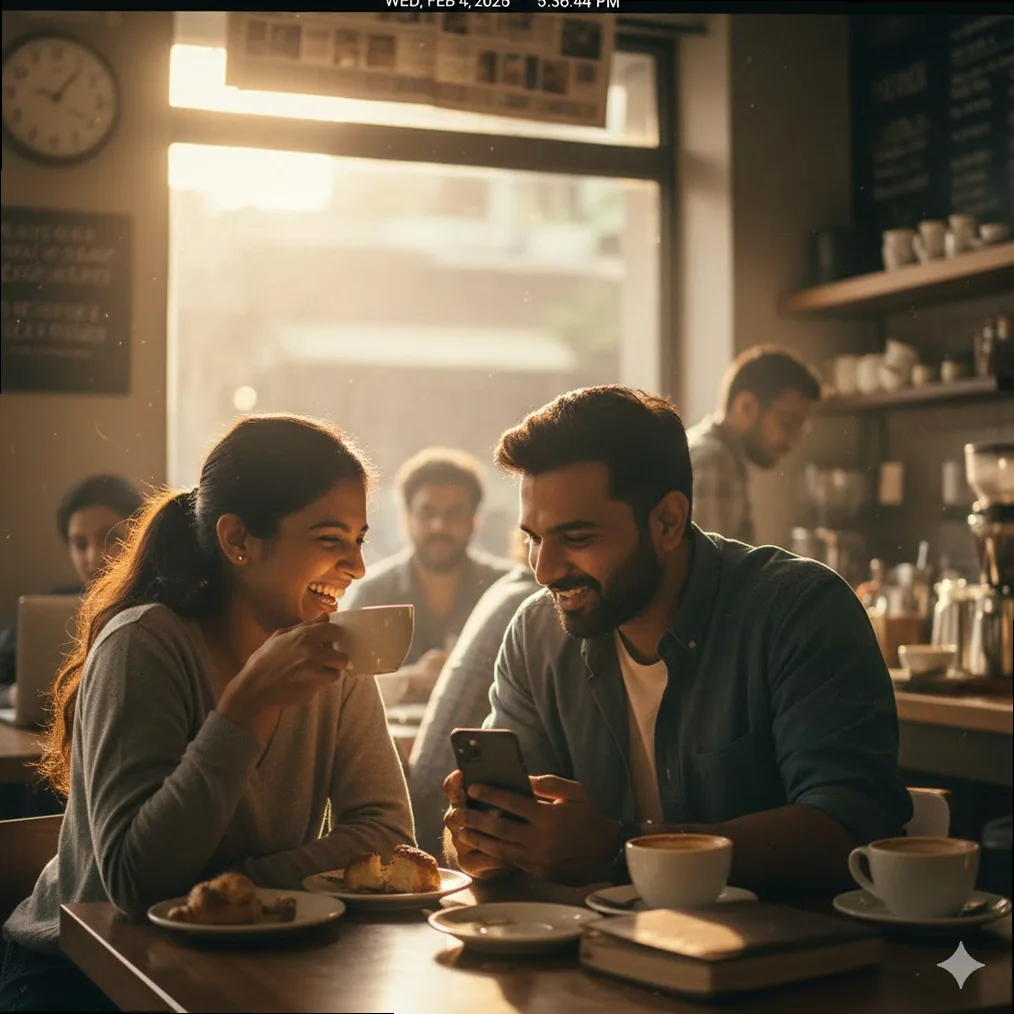
The Vibe: Candid photos are an invitation to connect, and your captions can amplify this effect, transforming a scroll into a conversation.
The Play: Instead of just stating the obvious, use your candid captions to ask open-ended questions about shared experiences. Prompt your audience to recall their own spontaneous joys or unexpected moments, using phrases like ‘What’s your favorite unplanned memory?’ or ‘Share a moment that caught you off guard!’ This creates a relatable narrative and encourages authentic engagement.
Building Bridges: Strategies for Deep Connection with Your Subjects
True photographic artistry extends far beyond technical skill; it originates from a photographer’s capacity to build trust and emotional intelligence. When subjects feel genuinely comfortable and seen, they naturally open up, revealing their authentic selves for images that resonate with profound truth.
The Empathy Lens: A Four-Step Process for Subject Connection
Moving beyond mere camera settings, this structured approach helps you cultivate a profound emotional connection with your subjects. It’s about transforming a standard photoshoot into an empathetic experience where genuine emotions naturally surface, leading to images with unparalleled depth.
Four Steps to Authentic Subject Connection
- **1. Disconnect from the Device** 📵: Begin by putting your camera down entirely. Step back from the technical aspects and simply observe your subject and environment without the lens as a buffer. This shifts your focus from settings to genuine presence.
- **2. Clarify Your Narrative** 📖: Before clicking, clearly define what story or emotion you want your photograph to convey. If you can’t articulate the essence of your subject, pause and reflect until its purpose becomes clear. This intentionality infuses depth into every shot.
- **3. Practice Mindful Observation** 🧘♀️: Arrive early, set up, then take a few moments to clear your mind. Sit, close your eyes, and allow yourself to simply be present in the space. Return with fresh eyes to notice subtle details and connections you might have otherwise missed.
- **4. Verbalize Your Vision & Feelings** 🗣️: Whether with a subject or alone, articulate your photographic intentions and current emotions aloud. Describing the scene, the desired mood, or what you want viewers to feel helps solidify your connection to the moment and guides your creative decisions.
The Power of Words: Guiding Subjects with Positive Language
A photographer’s communication isn’t merely about instruction; it’s about crafting an atmosphere of comfort and trust. Your words hold immense power to either stifle or unleash genuine emotion, making positive reinforcement a far more effective tool than criticism for capturing authentic expressions.
Directing with Heart: Do’s and Don’ts for Subject Comfort
- **Do:** Show, Don’t Just Tell 🤸♀️: Physically demonstrate the pose or expression you’re looking for. It’s often clearer and less intimidating than verbal instructions alone.
- **Do:** Compliment the Person, Not the Picture 💖: Instead of “This photo is great!”, say “You look absolutely incredible in these shots!” Focus praise on their contribution to build confidence.
- **Do:** Maintain Constant, Positive Dialogue 🗣️✨: Keep talking throughout the shoot – reassuring, encouraging, and making light jokes. This fills awkward silences and makes subjects feel supported, even if you’re not giving direct instructions.
- **Do:** Encourage Interaction Over Posing 🤝: Guide subjects to interact with each other or their environment naturally. Ask couples to whisper secrets or families to share a “squeeze fight” to elicit genuine reactions.
- **Do:** Set Clear, Gentle Expectations 💬: Inform subjects if you’re trying an experimental shot or if a pose might be slightly uncomfortable. Asking “Is this okay?” empowers them and builds trust.
- **Don’t:** Micro-Manage or Over-Correct 🙅♀️: Avoid nitpicking every small detail. Too much correction can make subjects self-conscious and stiff. Focus on the overall feeling and adjust with positive framing.
- **Do:** Use Storytelling Prompts 🎭: Instead of rigid directions, give them a scenario to embody. “Imagine you’re relaxing on a beach” helps them tap into an emotion, making their expressions naturally authentic.
The Vibe: Traditional posing can often lead to stiff, unnatural expressions. The secret to genuine emotion lies in engaging your subject’s imagination.
The Play: Instead of saying ’tilt your head here,’ try ‘Imagine you’ve just heard the funniest secret, and you’re trying *not* to laugh.’ Or, for a couple, ‘Whisper your favorite memory of them into their ear.’ These prompts bypass conscious posing, guiding subjects into authentic emotional states that translate beautifully on camera.
Composing Connection: Framing Emotion and Personality
Thoughtful composition, when paired with subtle, empathetic direction, transforms group photos from crowded snapshots into compelling narratives. This approach allows you to highlight genuine connections and celebrate individual personalities within the frame, creating images that tell a richer, more authentic story.
Composition & Connection: Tips for Capturing People
- **1. Master the Environment First** 🌳: Select locations with soft, flattering light that allows for subject movement without losing that ideal illumination. A clear, uncluttered background ensures your subjects stand out, not blend in. (´・ω・`)
- **2. Start Naturally, Then Refine** 🧘♀️: Encourage subjects to settle into a comfortable, unposed position initially. From there, make subtle adjustments to their posture, head tilt, or limb placement until their features are most flattering and their expression feels authentic.
- **3. Embrace Dynamic Angles & Framing** 🔄: Don’t stay static. Move around your subjects – shoot from above, below, or from different sides. Experiment with vertical and horizontal framing, and zoom levels to create variety and highlight unique perspectives within the scene.
- **4. Cultivate Subtle Expressions** 😊: Guide subjects into nuanced emotional states rather than demanding big smiles. Ask them to ‘give a tiny smile’ or ‘look back with just your eyes’ to capture genuine warmth and intrigue that feels less forced.
- **5. Prioritize Connection for Personality** 🤝: The deeper you understand your subjects, the more authentically you can capture their personality. Use music, conversation, or even playful prompts to create an environment where their true selves emerge, leading to more genuine images.
- **6. Anticipate & Document the ‘Anti-Pose’** 🏃♀️💨: Instead of always directing, take a documentary approach. Observe, predict interactions, and shoot continuously (even using burst mode) to capture those fleeting, unscripted moments of joy, laughter, or contemplation that reveal true character.
- **7. Use Distance for Emotional Depth** 🔭: When possible, position subjects a good distance from the background to create a pleasing depth of field. This technique, even on mobile, helps separate them from distractions and draws focus to their emotions and connections.
Hashtags for Authentic Photography
📚 Jargon Buster
- Wall of Glass
- The psychological barrier or awkward distance that often exists between a photographer and their subject, making shots feel forced.
- Anti-Pose
- A documentary-style approach where the photographer captures unscripted, raw interactions rather than directed movements.
- Imaginative Prompts
- Creative scenarios or stories given to a subject (e.g., 'Whisper a secret') to elicit real emotional reactions instead of forced smiles.
From the Community
Be the first to share! Drop a related quote or caption below.